orange label for "Joy Drop" next to version created for UF Health Libraries

News and announcements

🍊☀️ The University of Florida Libraries gave us a peek into the design process for their current centennial campaign. Utilizing the university’s primary brand but combining it with imagery that was reflective of the library (e.g. the facade window of Smathers Library), the UF Library Comms team created a look that was immediately recognizable. Moreover, they dove into their Jerry Chicone Jr. Citrus Label Collection to identify Florida-specific imagery that could highlight their six on-campus branches (as seen above). I love getting to see behind the curtain!

🚌🐎 Eight study rooms. Eight different themes. UC Davis Library recently remodeled its group study rooms to include more art, mostly utilizing recycled and reclaimed materials. All this was done through donations and less than $8,000. Some of the themes include: university traditions and athletics; animals and the university farm; bikes; buses; water towers; and the history of the library itself. 

📚🤝 One of North Carolina’s oldest Black-led nonprofits, the Durham Colored Library, will merge with the David M. Rubenstein Rare Book & Manuscript Library at Duke University. Even though the DCL’s branches were integrated into the county library system following desegregation, the non-profit continued to organize events and literacy programs. This merger builds upon a pre-existing relationship between DCL and Duke and is additionally bolstered by a grant from the Mellon Foundation to build new events, storytelling, and training programs. 

👩‍🏫🔍 Kate Carter and Natalia Kapacinskas are the 2025 recipients of the Rooks Early Career Librarian Fellowship at University of Houston Libraries. Carter will be exploring the lived experiences of open education librarians. Kapacinskas will be looking at autoethnographies published by librarians living with chronic illnesses and disabilities. 

❤️📊 Love Data Week is coming soon! Folks at RIT Libraries have a suite of events lined up, including one that will discuss AI poisoning, or the act of inserting code that disables (or at least hobbles) unwanted data scraping. See also: plans from other AcadLibs, including Fresno State and Wayne State

📺🎞️ USC Libraries has an amazing TV program, Lost LA, that is co-produced with its local PBS station. Episodes frequently feature the collections of the USC Libraries (though, they also feature other regional libraries as well). The show is now in its 8th season. The current season, which just dropped in January, has episodes about auto racing, science fiction, true crime, and colorful plants. 

🎉🚀 The University of Nebraska-Lincoln, in celebration of its 80th anniversary, is inviting undergraduate students to imagine (and share) their vision for the future of academic research libraries. Students can submit artwork, videos, music, and creative writing projects (among other formats) and have the chance to win cash prizes. What I love about this the most is that one day (say at its centennial event in 20 years), the library can look back on these predictions and see what students of the past thought the future would look like. 

Notable mentions 

On social

Honestly, the best luck I’ve had with getting students to fill out surveys is still the old fashion way: set up a table and catch people as they walk by. But I do like how the University of Illinois threw in a little whimsy to encourage students to fill out their surveys.

@uillinoislibrary

Students! The University Library wants to hear from YOU! 🫵
Help us improve our Main Library spaces with your feedback! 🗣️
Scan the QR code OR go to go.illinois.edu/2025MainLibrarySurvey to share your thoughts and get the chance to win some Library swag.😎
#LibraryTikTok #UniversityLibrary #UniversityOfIllinois #survey

♬ fantasmas – HUMBE

Perhaps this is only relatable to people who live perpetually online (or who follow beauty industry content creators), but this makeup haul-inspired special collections highlight from Boston College Library is a delight. 

New goals for 2026? Ohio State University Libraries can help. This mix of gentle background music and b-roll footage, combined with the occasional library staffer smiling and waving is a perfect timeline cleanser

This was actually the first time I saw this trend. I suspected something was up, but I’ll be honest, it still caught me by surprise when the fourth wall was reversed. From Hampden-Sydney College Library (who is regularly putting out fun content. Give them a follow!)

From Widener University’s Wolfgram Memorial Library, this was an elegant way to promote their sensory kits

@wolfgramlibrary

Sometimes you gotta lock out to lock in – we got you! Check out our new sensory kits #sensorykit #library #widener

♬ original sound – jacklevi121

Finally, so… many… libraries… went to the cottage this past week, including Emerson College Library, Connecticut College LibrariesTisch Library at Tufts University, and Hilbert College. I really shouldn’t have cancelled my HBO subscription last year.

@emersoncollegelibrary

Will you come to the Iwasaki Library this semester?? 🤨 We think you should! Whether you’re looking for: 🖥️ Desktop access, printers or scanners 🔇 The Sensory-Friendly Study Room, a private drop-in space designed for accessibility and focus (with different lighting options) 🎨 The CoLab or Phi Alpha Tau Room (W639) for group work or hanging out 💻 Or a study room you can reserve on Spacebook. We’ve got you covered!! We look forward to seeing our Lions in the Library this semester! 🦁 #IwasakiLibrary #EmersonCollege #SpringSemester #Library

♬ Heated Rivalry Coming to the Cottage – HBO Max

two divers over a lake

I am interested in the future because I expect to spend the rest of my life in the future. Charles F. Kettering, quoted in the L.A. Times, 19 July 1939.

Recently, I was invited by Angela Hursh, manager of engagement and marketing for NoveList and owner of the “Super Library Marketing” blog, to give my predictions for what 2026 will bring to library marketing. It was an honor to have my thoughts sit alongside other notable library marketing folks. I was the only academic librarian included in the piece. So doubly honored! If you haven’t already, jump over to Super Library Marketing to read the entire post.

Library marketing in academic libraries shares some similarities with marketing in public libraries, but there are significant differences. Our audience tends to be more narrowly confined by age and education level. We also have high user turnover: as much as 25% of our population leaves each year to be replaced with new users. Moreover, we usually only get to work on building connections with them for 2-4 years before they cycle out of our system completely. On the flip side, they can often function like a captive audience, depending on how integrated the library is with the curriculum. The communication landscape of a university is also dense, with plenty of opportunities for cross collaboration between departments. 

All this to say, my additions to Angela’s piece might benefit from some additional context, especially since I came at this from the perspective of an academic librarian. So below I’ve included my quoted sections of the original post, followed by additional commentary (that wasn’t included in my original contributions but were certainly in the back of my mind while writing them).

Prediction: “In 2026, social media will be more about connection than reach.”

My Quote: “It will be a challenge for libraries to engage with users who rarely step beyond those private spaces, [e.g. groups chats and DMs]” states John. “Combine this with algorithmically defined feeds, and now you have a situation where a library’s content may never get any eyeballs unless it can simultaneously ‘stop the scroll’ and be worth sharing. I expect this will drive library marketers to create content that is intentionally designed to be shared across platforms (i.e., there’s some social benefit to the user if/when they share the library’s content), but that may also leave marketers in the dark concerning assessing the true impact of any digital campaigns.”

Commentary: Being successful on social media is more difficult than it used to be. Platforms no longer offer chronological feeds. The FYP is the new default. The only way for me have a chance at getting student eyeballs is to (1) create content that impresses the algorithm or (2) create content that has a high benefit-to-share ratio. The second of these is easier to create, though perhaps more limiting. Libraries that can achieve 1 and 2 simultaneously will be the most successful and it’s one of the reasons I rely on shares/sends to measure social media success. However, once it leaves the platform (e.g. gets shared to the group chat), it becomes impossible to track so the true extent of the word of mouth will be unknown. 

Prediction: “Libraries that invest in marketing as essential infrastructure, rather than an add-on, will be better positioned for sustainability and trust.”

My Quote: “Smarter marketing, building connections, hyperlocal relevance: none of this will be possible without content strategists and content creators who have the right skills, experience, staff, and equipment to bring this to bear,” contends John. “It behooves library administrators to commit when it comes to external communications. It’s not enough to have an amazing library. You’ve got to keep selling it, over and over and over and over again.” 

Commentary: If you build it… they probably won’t notice. It is the year of our lord 2026. We should not be having to explain why marketing, communications, and outreach are essential functions of the academic library. The pitfall that I see most academic libraries fall into is that they assign these essential functions to non-professionals. A committee, student employees, the newest hire, the most eager employee. Not that these folks are not capable, but quality marketing and strategic outreach comes from experience and skills. The library’s place within the campus ecosystem and student life is not a given. We need skilled storytellers who can capture hearts and minds. So if you want to succeed in this area, hire and staff like you mean it. 

Prediction: “The most effective library marketing in 2026 will make people feel seen, supported, and welcome, not just informed.”

My Quote: “The media success of libraries like Columbus Metropolitan Library and Los Angeles Public Library is going to drive more libraries to invest in creative storytelling,” he says. “The libraries that can muster the right amount of creativity, leadership, and resources will focus on slow storytelling (think: Craighill or Planet Money) and serial content (think: “Roomies” by Bilt or “Chit” by Jay Renshaw). This will likely drive libraries to mimic each other on social, so the challenge for any library content creator will be to find a way to rise above it all and deliver content that is both uniquely entertaining and directly relevant to their communities.”

Commentary: Your website is not a bulletin board. Your e-newsletter is no a bulletin board. Social media is not a bulletin board. Our library users and our staff need to be the center of our messaging strategy. Whether it’s through highlighting library fans or turning your staff into main characters, folks are looking (1) to be entertained and (2) to form parasocial relationships with the organizations they love. As library marketers, we are tasked with wooing our audiences through connection, understanding, and just the right amount of spice. You can’t “template” marketing. If it were that simple, companies would not pay six figure salaries to content strategists and “storytellers.” If anything, using templates or following a formula is exactly the opposite of effective marketing because the entire point is to rise above the noise in order to connect what your users want to what you have to offer. Each library has unique campus communities to appeal to, so invest in both taking the time to understand those communities and hiring folks best skilled to foster those connections through creative outreach.

What I’m reading 

The Age of Academic Slop is Upon Us by Seva Gunitsky: “It seems people were using AI to generate terrible manuscripts and then shotgun-spraying them across the academy with little regard for quality or fit […] And these papers won’t be bad. They’ll be narrowly useful, methodologically sound, and for the most part not very interesting.”

Behind the Scenes with Milwaukee Public Library’s TikTok by Hannah Arata: “Each video, whether it takes 10 minutes or seven hours to create, becomes an invitation for someone to rediscover their library or step inside for the first time. As MPL continues to experiment and learn from its data, staff are proving that libraries can be both rooted in tradition and innovation.”

We’re not nostalgic for 2016 — we’re nostalgic for the internet before all the slop by Amanda Silberling: “As AI increasingly encroaches on everything we do on the internet, 2016 also represents a moment before The Algorithm™ took over, when “enshittification” had not yet reached the point of no return.”

Links to the past 

  • 1 year ago: Duke University’s Lilly Library was getting “cored like an apple.”
  • 5 years ago: My library was winning the ACRL Excellence in Academic Libraries Award!
  • 10 years ago: I started task blocking my days. I still do this and it’s the only way I’m able to get as much done during my week as I do.
  • 15 years ago: I was singing the praises of online education. If I only knew what the next decade would bring.

Overheard online 

Recently I logged in to the photo app and the short form videos were ALL about #Godzilla. Hadn’t seen anything related on that app in a while so who knows why, but I am happy about the result. @Anneheathen on Mastodon

banner photo: Diving into the Colorado River at “Parker Strip,” a favorite swimming spot of southern Californians and Arizonians, April 1973 (source: U.S. National Archives on flickr)

illustration of a 19th century cottage

Social media happens so fast. I mean, just over a week ago, we were still talking about #ConformityGate (aside: How are y’all doing? You ok? 🧇) and none of us were talking about the cottage. So in between the monthly “Recently in Academic Libraries” posts, I pull together regular updates on what AcadLibs are doing on social. Please enjoy these recent highlights.

Ins/outs 2026

The “Ins and Outs” trend really peaked last year, but I think it has a couple years left in it before it becomes old hat. We did it at my library and so did UC Santa Barbara, University of South Florida, and DeSales.

Another library’s treasure

I love exhibitions about discarded objects: left-behind water bottles, items left in the return bin, and in the case of UNC Library, objects found in library books. The gentle soundtrack and collage aesthetic is perfect for this time of year: cozy and comforting. For libraries that save found objects, this would be an easy post to replicate and one that might find a happy audience among college alumni. (But wait, did that say “send feet pix?”)

BRB, going analog

According to some cultural weathervanes, analog is cool again. As a librarian, older formats never lost their charm for me, but I’m delighted to see younger generations discovering the joys of physical media. Fresno State Library is highlighting its Media Lab with this post, as well as its collections of CDs and LPs. It looks like the students/staff in this carousel had some fun doing the photoshoot as well. Man, I had that Lauryn Hill album and I wore it out. 

Here’s your sign

This is a perfect start-of-the-year format for any library. If you’ve only got one library building, find 12 spaces or services to highlight. If you’ve got multiple campus libraries, even better. If you’re not an expert in astrology, consider consulting someone who knows a little more about the culture and practice around it. From Yale Library:

Oh so pretty

Carousels are having a moment. Again. Honestly, it feels like we’ve been coming back to the carousel format repeatedly over the past 2-3 years. Folks just love to swipe through photos. So what better time than the start of the new year to pull together some of your best library pics. This one from the University of South Carolina was my favorite, but see also: University of Cincinnati, Arizona State, UT Arlington, University of Alabama Arlington, Syracuse, Grand Valley State, Dartmouth, Cornell, and Colorado State (with sad music).

And finally…

This is your annual reminder to save all your b-roll this year so you can create recaps like this one from Kansas State University Libraries.

banner image: detail from the “The Cottage of Content, or, The Right Roads and Wrong Ways,” an 1848 board game published in London by William Spooner (source)

ad for progressive brand lemons, with lemon pie, lemonade, and lemons

A salesman is got to dream, boy. It comes with the territory. Death of a Salesman, Arthur Miller (1949)

We made it through the first quarter of the 21st century. By the skin of our teeth, if you ask me, and we’re still holding on by a thread. 2025 wasn’t a spectacular year for me personally, but it also wasn’t the worst I’ve experienced. I had some small wins at work. Some bigger wins at home. Let’s call it a rebuilding year. 

2026, on the other hand, may prove to be a doozy. I’m scheduled to go up for full librarian. Our university is under new management. And I’m currently signed on to two major libraries projects: developing a marketing kit for open educational resources and helping to re-launch Project CORA. My team was also cut 25% so I’m doing the proverbial more with less. So it goes.

As is customary this time of year, I’ve been thinking about where I want go and how I want to be in 2026 (or, how I want to go and where I want to be). I saw a post recently where the author “manifested” their professional hopes for 2026. I liked the format so here I go. Here’s what I’m hoping to manifest for 2026:

  1. The “Recently in Academic Libraries” posts really pop off and I can justify spinning those into a regular Substack or Patreon newsletter.
  2. We assemble a team of academic library marketing/outreach folks to conduct hardcore research that helps codify library marketing/outreach as its own LIS specialization/subfield. 
  3. The academic library marketing folks build a vibrant online community (preferably not on Facebook).
  4. I’m invited to give a keynote about marketing and outreach in academic libraries.
  5. Some academic library—doesn’t have to be mine—starts going viral on the regular in the same way that LAPL and Milwaukee Public have, drawing attention to the role we can play as cultural shapers.

It should be apparent from the above that one of my current obsessions is the professionalization of academic library marketing and outreach work. I’ll admit it: I’m somewhat jealous of my colleagues in public libraries, museums, and other cultural institutions who are doing amazing marketing work and who are rightfully drawing national attention for it. As an outsider, it appears that marketing and outreach work in these organizations is treated as more essential to strategy and operations (though, I’m sure it doesn’t feel like that from the inside!). I want to see that success—and the support that that success requires—manifested in academic libraries as well. 

What I’m reading 

Why AI Didn’t Transform Our Lives by Cal Newport. “Such breathlessness now seems rash.” The AI agents that so many in tech said would revolutionize our lives are surprisingly incapable of simple tasks. Or, to put it differently, living and thinking in meat space is far more complicated than we give it credit for. 

The State of Library Marketing 2026 by Angela Hursh. The #1 challenge for respondents to Angela Hursh’s annual survey is time and capacity:  “41 percent of respondents stated they feel they lack the time or resources needed to perform their jobs effectively.” I definitely feel the stress of all five challenges highlighted. 

Research as Leisure Activity by Celine Nguyen. “I truly think that autodidacts are responsible for all that is good and great about alternative culture.” When I finally win the lottery and no longer need to work for a living, I look forward to spending my days as a leisurely researcher. 

Links to the past 

  • 1 year ago: I think about this quote at least once a day. 
  • 5 years ago: I set out to write every day. Hm, I should do that again.
  • 10 years ago: I’m still “the guy who wears the bow ties.” Why stop now?
  • 15 years ago: Some advice from ALA Midwinter on personal branding online. Most of this still holds up! 

Overheard online 

ways you can tell I am in fact a trained librarian  despite the unusual career path: just sent a text which included the phrase “✨ structured metadata ♥️” @thatandromeda on Bluesky

banner photo: Lemon crate label, Progressive Brand, Lehmann Printing and Lithographing Co. (on flickr)

Hip hop exhibit in airport. Collage of art and albums.

News and announcements

✈️🎧 Emory University’s Rose Library is hosting an exhibit (seen above) at the Hartsfield-Jackson Atlanta International Airport. “Beyond the 50: Continuing Hip Hop’s Legacy” is a two-year exhibit honoring Atlanta’s EarWax Records and its role in hip hop history. The exhibit features a replica storefront, posters, stickers, studio equipment, and other archival materials from Emory and EarWax founder Darryl “Jasz” Smith. According to the post, Emory Libraries and the Atlanta airport may work together again on future exhibitions. Love this! 

💰📚 In its 5 years, the e-textbook program at Illinois State University’s Milner Library has saved its students more than $10 million. By providing free, accessible e-books for course use, the program reduces students’ financial burden and improves learning outcomes and equity. Faculty praised its impact, calling it “a godsend.” This sentence in particular caught my attention: “We found that an investment of $10,000-$14,000 a semester yields a total potential student savings of around $200,000 to $260,000.” Now that’s ROI. 

😆✍️ The Jean and Alexander Heard Libraries at Vanderbilt University now house the Roy Blount Jr. Papers, a collection of correspondence, writings, and research from the acclaimed humorist and 1963 Vanderbilt graduate. The archive offers insight into Blount’s career as an author, journalist, and cultural commentator (and frequent panelist on “Wait Wait Don’t Tell Me!”). These materials will provide a unique resource for exploring American humor, language, and identity from someone who has been around to write about some of the most notable moments in recent history. 

🛠️💡 Binghamton University Library has a new MakerLab, equipped with 3D printers and scanners, laser cutters, vinyl cutters, and VR tech. The lab supports academic projects across disciplines from art to engineering. MakerLab Coordinator Chungmin Park aims to expand partnerships and foster creativity, helping students turn ideas into tangible designs. Open since August, the lab encourages innovation through technology-driven coursework and student-led projects.

🪕💿 Indiana University Bloomington’s Archives of Traditional Music team honored folk music legend and IU alumnus Joe Hickerson with an exhibition and a lively folk sing-along celebrating his life and work. The Joseph C. Hickerson collection houses treasures like Camp Woodland and Catskill Folk Festival recordings, some featuring Pete Seeger and Hickerson’s own “Drive Dull Care Away,” alongside stories of his role in shaping “Where Have All the Flowers Gone” into a peace anthem. The exhibit remains on view at Cook Music Library through fall.

Notable mentions 

Three clay figures in front of neon sign that says "Marston Makerspace"
  • The University of Florida Libraries reviewed some of its best fall semester events, including a makerspace night (seen above), open house, and daytime concert. 
  • Touro University Libraries created a fake news LibGuide.
  • Falvey Library at Villanova explores printable toys sourced from magazines like The Chicago Ledger.
  • Many libraries support a food pantry for students, but Mercer University Libraries supports one for pets, too! 
  • Speaking of pets, UC Davis Library has an art collection dedicated to dogs.
  • The University of Arkansas Libraries are inviting students, faculty, and staff to attend virtual reality drop-in sessions.
  • If you find a hidden horse in the stacks of Southern Methodist University Libraries, you’ve stumbled upon a scavenger hunt.
  • For those one-of-a-kind materials in special collections, UW Libraries has created an “out of scope” exhibit.
  • NC State University Libraries received a grant to support a game development contest (plus another grant to develop data training for grad students). 
  • Stony Brook University Libraries has launched an AI steering committee (this follows their creation of a “Director of Artificial Intelligence” position)

On social

The University of Oklahoma Libraries is sending nothing but good vibes in this Instagram post. This type of affirmative post would be easy for any university library to create; just substitute your own high quality photography!

Instagram has fed me this post by William & Mary Libraries more than once and I stop to look at it every time. The use of b-roll video with the color filter and minimal movement is absolutely gorgeous. To say nothing of all the fun events for finals week.

Now THIS is how you promote a database. Courtesy of Tulane Libraries.

Cook or be cooked. The always-on-trend UVU Library continues to deliver relatable content. Well, relatable to students in any case! 

https://www.tiktok.com/@uvulibrary/video/7579704395324050702?_r=1&_t=ZT-92I0XWFK3ZX

Need a sentimental, hand-made gift just in time for the holidays? The folks at ASU Libraries have you covered. The close-up, step-by-step video style showcases how easy and accessible the library’s makerspace is. 

illustration of the dance macabre with skeletons

News and announcements

The Baldwin Library of Historical Children’s Literature at the University of Florida is one of the largest collections of children’s books in the world. Last month, they announced that they had received a donation of books from the family of Ed Young, a notable children’s book author and illustrator. Young, who passed away in 2023, illustrated some 100 books of fairy tales, poetry and memoirs, and won a Caldecott Medal and two Caldecott Honors. The donation to UF Libraries includes books from his personal collection. 

The University of Delaware Library recently announced the winners of its inaugural Open Data Impact Awards. These awards “celebrate UD students, faculty and staff whose openly shared datasets continue to make meaningful contributions to research, teaching and public engagement.” One of the winners pulled together attendee-level datasets for 33 years of the United Nations Framework Convention on Climate Change Conference of the Parties. Another created a global dataset of monthly irrigated and rainfed cropped areas for 23 crop classes over 15 years. 

Discover the hidden art of fore-edge painting—images tucked into the gilded edges of  books, usually invisible until pages are fanned. The J. Willard Marriott Library’s “The Business of Books” exhibition showcases these secret masterpieces, including works by 20th century California artist Vera Dutter and historic English binders. The exhibit reveals how books can simultaneously be objects of beauty, mystery, and commerce. (My parents definitely had books with gilded edges. I wonder…)

I’ve always said that if I ever got a tattoo, it would be a memento mori (pictured above). Illinois State University Libraries highlights one of its notable holdings, a 1590s publication of the Booke of Christian Prayers, which includes various depictions of death, “the great leveler for all.” 

A simple announcement but a notable one. Brown University Library has created a new faculty publications collection. This circulating collection consists of print books authored by Brown faculty members as well as digital publications, which can be accessed via QR codes within the display. On the one hand, I’m surprised more academic libraries don’t have collections like these. On the other hand, I know the difficulty of having to keep a collection like this up to date (and heaven forbid you leave someone out). 

Notable mentions 

Finally, International Open Access Week was Oct. 20. A number of libraries celebrated the occasion by highlighting their services and collections, including Boston University Librareies, Touro University Libraries, Seattle University, Villanova’s Falvey Library, Seattle University, IU Bloomington Libraries, Fordham, University of Delaware, University of Louisville, UC Davis, and the University of Maryland BC.

On social

This spend the day with me video from University of South Carolina Libraries  has to be one of the best pieces of academic library content I’ve seen in a while. Not only is it totes adorbs, but someone really put some thought into the script. The modified voice is chef’s kiss.

Make a collage for each of your different campus libraries. Just like how University of Illinois did it here. Don’t have multiple libraries? Do one for different spaces, floors, or collections.

This format from the B.D. Owens Library at Northwest Missouri State University seems easily replicable at any college. Just throw in a few bulleted item specific to your institution. 

https://www.tiktok.com/@clubowenslibrary/video/7564425899806821663?_r=1&_t=ZT-90uy24NvH0Y

This remix was living in my head rent free for days after SNL and Sabrina Carpenter posted it. My team hopped on the meme and it outperformed our usual content. But I loved the twist the UVU Library put on it. 

@uvulibrary

We know social media can be humerus, but it’s time to bone up on your anatomy homework! You can borrow skeletons, models, and more at Fulton Library’s first-floor Circulation Desk for free. #BeezInTheTrap #Trending #Library #CollegeLife #StudyTok

♬ original sound – uvulibrary

Finally, I’m going to self promote a little bit. Every semester at the William H. Hannon Library, we unveil a new set of stickers. Before we had even made the stickers this year, I knew how I wanted to premiere them

magets wrapped in tyvek on top of manuscript page

News and announcements

✨🖥️ 🖼 The AUC Robert W. Woodruff Library secured a $500,000 grant from the MacArthur Foundation to boost its ongoing HBCU digitization initiative. This two-year funding will expand the library’s capacity to digitize, preserve, and share archives from Historically Black Colleges and Universities via the HBCU Digital Library Trust. Partnering with HBCUs, the AUC library hosts a growing portal that already features collections from over 30 institutions. 

🎶🎙️🌍 The Archives of Traditional Music (ATM) at Indiana University preserves more than 250,000 hours of recordings in formats from wax cylinders to vinyl and VHS. Many materials are now digitally accessible via streaming. ATM’s collections are shaped by donor gifts, shifting research emphases, and archival vision, and today they support work in language revitalization, ethnomusicology, and cultural memory. 

🔍💾🤝 The University of Chicago Libraries launched “SHARED” (Secure Hub for Access, Reliability, and Exchange of Data), a new data platform backed by NSF funding to support research collaboration and discovery. It offers scalable, secure storage and integrates with UChicago’s Knowledge@UChicago repository as well as national networks like the Open Science Grid. This project will support the full research data lifecycle and enable faculty to comply with federal data-sharing mandates. 

🧠📄⚖️ Berkeley Library created an FAQ to help ensure compliance when scraping or using AI with its electronic collections. Which is good because violating license terms could risk campus-wide access to critical resources and lead to legal liabilities.

📚🏛️🎉 Knight at Night at the University of Oregon is a late-evening event for first-year and transfer students with live music, games, DIY crafts, trivia, mini-gold, and social space in the library. What an amazing open house style event!

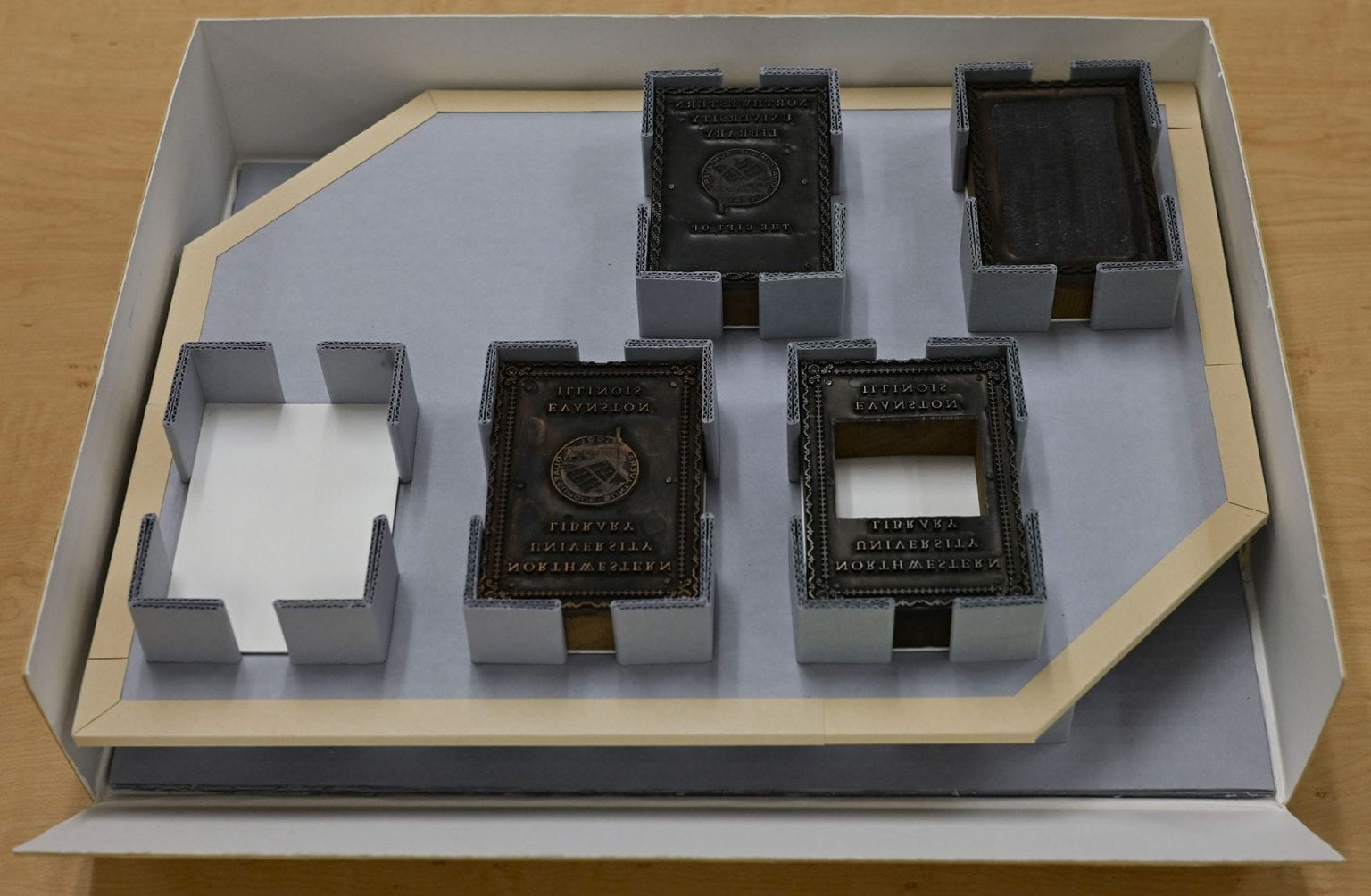
🗞️🧱✍️ Northwestern University Libraries’s conservation lab treated 22 tightly folded 18th-century parchment documents (1705–1730), from a collection that included deeds, wills, and seals from the 14th through 20th century. Damage included creases, tears, and wax flaking, and conservators worked to safely unfold and stabilize these fragile legal records. (pictured above)

📖🌐👩‍🏫 Gonzaga University welcomed Katia Passerini as its 27th president back in July and celebrated her scholarly contributions via a new research guide. The LibGuide showcases her publications, honors, and interdisciplinary impact across education, global development, and innovation. This is a pretty cool way to celebrate university leadership.

Notable mentions

Many libraries pulled together resources and recommended readings for Latine Heritage Month, including; USF’s Gleeson Library, University of Utah’s Marriott Library, Binghamton University Library, University of Virginia, University of Dayton, UC Irvine Libraries, Syracuse University, San Diego State University, Loyola Marymount University, Emory University, and American University

On social

This was a trend for a hot minute, and FSU Libraries jumped on it with a perfect iteration, showing how to fix a common frustration students have entering the library. (FSU also jumped on the Alexander sneaking out meme) 

My favorite part of this trend was getting to hear a song that I will never tire of.  OK State Library executed it seamlessly. 

A few libraries jumped on the “Unfortunately I do love…” meme, including Penn Libraries, Fondren Library, and EKU Libraries

Finally… why, Instagram? WHHHHYYYYY?

group of students sitting in a circle talking and taking notes

It takes a great deal of history to produce a little literature. Henry James, Hawthorne (1876)

I have been creating content for academic libraries for more than a decade. The definition of “content creator” has changed significantly in the past ten years, especially since the emergence of TikTok, and expanded to include a set of skills and activities that have exceed what I ever imagined I would be asked to do. To effectively market academic libraries these days, you need graphic design skills, video editing chops, an eye for photography, a knack for writing everything from blurbs to long-form reports, an understanding of how social media algorithms work, and web design. And that’s only including what’s needed for making digital content, to say nothing of print, or the more relationship-centered work that is generally considered “outreach.” The job is far more complex than one person would normally be expected to handle; though, out of necessity, many do. 

Perhaps this is why lately I’ve been dreaming of having a writers’ room to help develop library content. No, not a committee. This isn’t a service opportunity. Successful entry into the writers’ room would require some minimal level of aptitude, either in writing dialogue or developing storylines. So, still a low barrier to entry, but not necessarily a situation in which anyone would succeed just by virtue of being a library employee. And unlike a committee, the writers’ room would need to meet frequently, like two to three times weekly, to keep the creative momentum.

Suffice to say this isn’t a workflow that would likely survive in academia, but for a brief moment, I had something like this within my team. Last semester, our student employees would regularly hang out in our office suite before/after their shifts or between classes. Our conversations often found their way around to works in progress. It was in these moments that I could see the potential for regular pitch-and-workshop sessions around natal ideas. Many content ideas came out of these conversations (which, of course we didn’t actually work on until folks were back on the clock), driven by the diversity of life experiences, FYPs, and cultural references. Ideas that (1) developed at a faster pace and (2) I would never have developed on my own, or that would have seemed poor were it not for the enrichment of others’ perspectives. 

I want more of that.

What I’m reading 

🤖💥😳 Our Shared Reality Will Self-Destruct in the Next 12 Months by Ted Gioia: “At the current rate of technological advance, all reliable ways of validating truth will soon be gone. My best guess is that we have another 12 months to enjoy some degree of confidence in our shared sense of reality.” Well, that’s a fun thought. 

🍊💀🌐 President Trump Is Alive. The Internet Was Convinced Otherwise by Katie Rogers. This was my primary source of entertainment over the holiday weekend. It’s classic conspiracy theory, but the ride was delightful and I loved every minute of it.

🔧📞🪙 An engineer restores pay phones for free public use by Julian Ring. Please normalize this. Maybe if we bring back pay phones, we can all leave our phones at home more often. 

Links to the past 

  • 1 year ago: I was complaining about committees (Still am. See above) and urging for more intentional support structures for library outreach and communications work. 
  • 5 years ago: Nothing. Apparently I was taking a long sabbatical from blogging in 2020. Huh, wonder why.
  • 10 years ago: I was preparing to move to my new job at the William H. Hannon Library.
  • 15 years ago: I was in the middle of my MLIS program and looking to answer that essential LIS question: What is information?

Overheard online 

Thank goodness we’re going back to the good old times before… *checks notes* medicine @beyondmeat on Threads 

banner image: Seminar Group, c1981 (lselibrary on Flickr)

students working on zines

News and announcements

📸 Emory University’s Woodruff Library is cataloging a remarkable donation of photography books from Sir Elton John, who gifted around 2,000 titles after selling his longtime Atlanta residence. The collection includes limited-edition, signed, and annotated books spanning five decades and over 25 countries. Staff have found personal touches in the books, such as sticky notes, printed emails, and handwritten messages, offering intimate glimpses into his artistic interests and relationships. Here’s the part that I loved: “In the process of cataloging, dust jackets are typically removed and discarded. But in an effort to reduce waste, Emory hosted a zine-making and collage workshop called “HANDS ON: An art making study break with Sir Elton John’s photography books” using the jackets as art material” (pictured above). So cool!

👩‍⚖️ Berkeley Library is processing four collections relating to women in politics: the Vera Smith Schultz papers, Mary Moore papers, Marjorie H. E. Benedict papers, and Eleanor Cameron Fowle papers. Each collection offers insights into local governance, party organizing, and political advocacy (esp. in California). Highlights range from Moore’s tenure on the Oakland City Council and Schultz’s pioneering civic leadership in Marin County, to Benedict’s Republican National Committee work and Cameron’s Democratic activism and biographical writing.

😣 “Please be patient and partner with us as we adapt.” That’s the core message of the latest from Duke University Libraries regarding the reductions in library staff and budget. Subject librarians need to be reassigned, the number of workshops will be reduced, and certain services will be cut back which could result in longer wait times and limited access to library spaces. It’s the worst possible position to be in, one that reduces support for both students and faculty. 

🪡 The University of Georgia Libraries opened a new “Creative Engagement Wing” where students can, among other things: utilize a variety of makerspace equipment (laser cutter, 3D printer, sewing machine), explore VR, practice group presentations, create podcasts, and get access to video, audio, and graphic design software. “We want students to feel comfortable engaging with emerging technologies and for the barrier to entry to be low,” said Sara Wright, UGA’s associate university librarian for learning services and academic engagement.

🌴 The Emory University Libraries conservation team is hosting a workshop on palm leaf manuscripts. Participants will be shown how to assemble a paperboard model, given an introduction to the history of the palm leaf manuscript structure, and provided with resources for further exploration. The team will also share important innovations in photographing, housing, and preserving these materials. This is the third in an annual series of conservations workshop. The first, offered in 2023, explored paper marbling. In 2024, the workshop focused on paste papers. 

Notable mentions

With the new academic year starting at many colleges and universities, libraries are welcoming new students and faculty and reminding them about the essentials. Examples include University of Cincinnati, Binghamton University, Emory, Fordham, University of Denver, Boston University, Loyola Marymount University, Seton Hall, and Villanova.

On social

For me, one sign of good social media content is whether I can tell someone had fun making it. Even though there are no people depicted in this Reel from Western University, it feels like someone thoroughly enjoyed putting it together. The hippo may not be real, but support from the library certainly is!

Maybe not useful to everyone, but this Reel is easily replicable if your library has any recurring architectural motifs. Apparently, the River Campus Libraries at the University of Rochester has owls.

https://www.instagram.com/reel/DNq8C1k4p2Q/?igsh=NTc4MTIwNjQ2YQ==

I do NOT get tired of watching this. And, like, I knew it was coming, but I still find it hilarious. Absolutely delightful. Thank you, as always UVU Library.

Whether you like it or not, Labubus are trending. Mizzou Libraries has Labubu-inspired reading lists and George Mason Libraries has one exploring its spaces. Bring on the chaos!  

8 colorful plastic origami shapes on a desk

New and announcements

🪨 The Materials Library at the University of Pennsylvania is a collection of around 10,000 material samples ranging from limestone to ultramarine pigments and everything in between. Recently, the library staff explored the potential of bioplastics through hands-on experimentation (pictured above). Inspired by student-led research, staff created DIY bioplastics using recipes no more complex than making Jello-O to better understand sustainable alternatives to petroleum-based plastics. Learning through making! 

🍇 UC Davis continues to expand its wine research collections with a recent gift to help preserve the history of viticulture in San Luis Obispo County. Information gathered from more than 170 interviews, research materials behind 13 documentaries, artwork, wine labels, catalogs, maps, and tools (including historical corkscrews) will become part of the collection, which are being donated by Libbie Agran, founder of the Wine History Project of San Luis Obispo County. File this one under “dream job.”

🩺 Curatorial assistant Elizabeth Arterberry reviews a selection of materials from Indiana University Bloomington Libraries’ Notable Medical Books Collection, including works by Paracelsus, Andreas Vesalius, Gasparo Tagliacozzi, and other lesser-than-household names within the history of medicine. Though, as Arterberry points out, some of these texts were also some of the most plagiarized in that they provided excellent, practical examples for practicing doctors of their time. 

🔥 The University of Chicago Library has created a Banned Books dataset internship to help improve the public’s understanding of (i.e. access to data about) books that have been challenged in U.S. schools and libraries. “The project involves migrating a standalone database to the Wikidata platform and will result in an open and sustainable resource that is widely available for public contribution and community stewardship.” This internship is only open to University of Chicago graduate students, but I love that it’s end product is an openly accessible dataset that will be useful to librarians, journalists, researchers, and educators around the world.

🧩 Students and staff at the Tisch Library at Tufts University recently completed a 60,000 piece puzzle. More than 100 students participated in the academic year-long which began in August 2024 and ended in April 2025. What a lovely simple community-driven student engagement project. I can only imagine what it felt like to unveil the completed 8’x29’ work… or the hesitancy of having to put it back inside the box.

💝 A small act of kindness nearly 30 years ago, i.e. giving a student a key to a study room, sparked a lifelong impact. Now a successful ophthalmologist, Nitin Gupta honored that pivotal moment at NC State’s Hill Library by establishing the Gupta Family Libraries Faculty Development Endowment. The fund will support librarian research, recruitment, and enrichment, recognizing the vital role libraries play in student success. “Gupta hopes to provide Libraries leadership with the means to build outstanding departments and programs through a well-supported staff.” Amen.

Notable mentions

On social

My name is pink. Something to take the edge off. A jet 2 holiday. The Nikki pose. The memes were coming in hot and heavy this month (because what else is there to do when the students and faculty are away), but instead of focused on those delightfully entertaining takes, here are a few oddballs that stood out to me. 

The folks over at Alden Library of Ohio University have created their own socks. I’ve seen a lot of library merch in my day, but custom socks are a rarity and something that I have no doubt will be a crowd pleaser. There’s so much they could do with this: sock puppetry, the Risky Business slide, a library Dobby. 🧦🙌

This Reel from Stockton University‘s Bjork Library providing a construction update on their new learning commons wins for the intro shot alone. I hope they plan to use all that b-roll for some amazing before and after videos once the project is complete.

“Hey, I have a shark costume,” is how I imagine this video from Kansas State University Libraries probably got its start. You can tell they were having fun filming it: the way she almost loses her concentration just at the end.

https://www.youtube.com/shorts/R-jkT9CEhRE

Ok, I said I wasn’t going to talk about memes, but this one is worth highlighting. University of South Carolina Libraries played on the “This and…” trend with good photography and library moments that any student could identify with. It’s a template that I could see other libraries easily adapting.